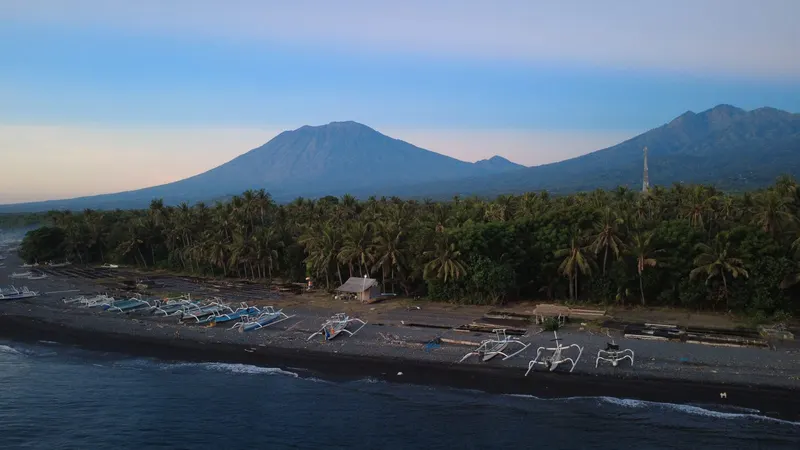
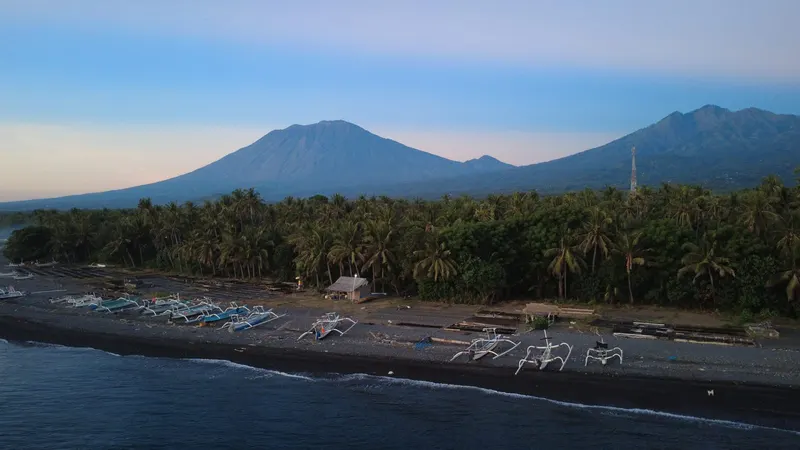
A working coast, three hours north of the airport, with Mount Agung behind it.
Eleven canvas lodges and one kitchen, open since 1 July 2026.
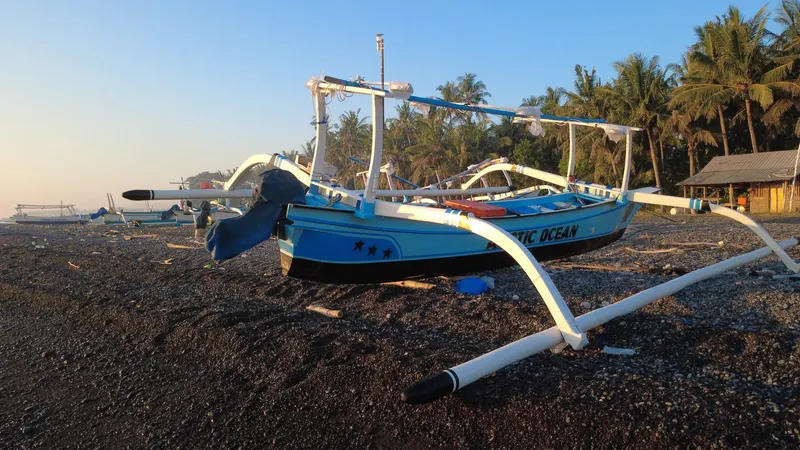
The boats go first.
You hear the outrigger engines start in the dark, and the boats are back before the heat. What they bring in is what Saga cooks.
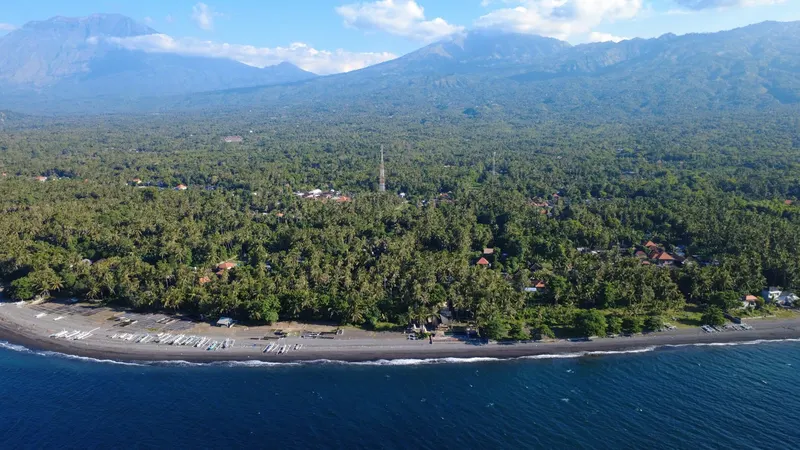
Pebbles, not a beach club.
Volcanic pebbles, coarse and dark, warm long after sunset. Safe to swim, unless we say otherwise that day. No loungers, no beach bar.
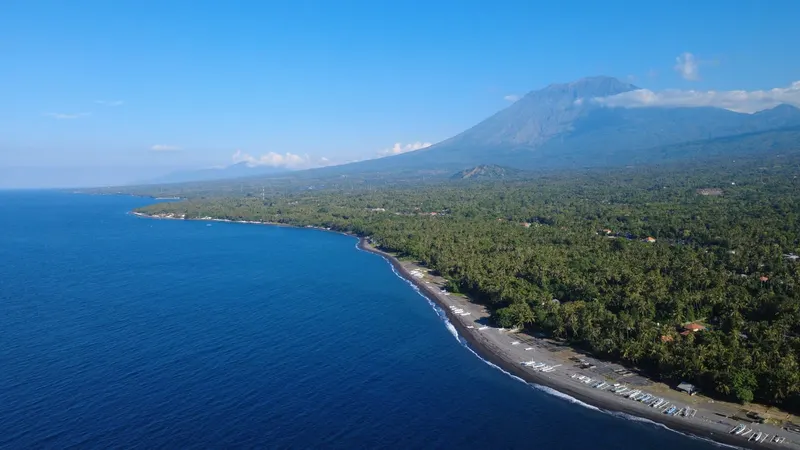
Mount Agung made the ground you are standing on.
Bali's highest mountain, inland to the south. Clearest at sunrise, before the cloud builds, and clearest of all from May to September.
Salt, made by hand, for decades.
East of us the pebbles turn to dark sand, and salt has been made there by hand for decades: seawater, sun, and a brine left to dry in hollowed trunks.
Nothing here is staged.
A temple at the water, and offerings that are real, not staged. Nothing here is performed.
The boats go first.
Tianyar wakes before the sun. In the dark before dawn you hear outrigger engines starting along the beach, one after another, and then nothing. The jukungs go out past the reef while the water is still flat and come back before the heat sets in with whatever the sea gave that morning. Saga buys what it needs on the shore, and that is why the kitchen has a short menu that changes. You can lie in your lodge and hear all of it happen.
Pebbles, not a beach club.
The beach here is volcanic pebbles, coarse and dark, hot underfoot by mid-morning and still warm long after the sun has gone. The sea in front of the property is calmer than the south coast and safe to swim in, unless we tell you otherwise for that particular day. Local children swim here after school. There are no loungers in rows, no beach bar and no one selling anything. The boats are drawn up on the stones, painted, with their outriggers out like wings.
Mount Agung made the ground you are standing on.
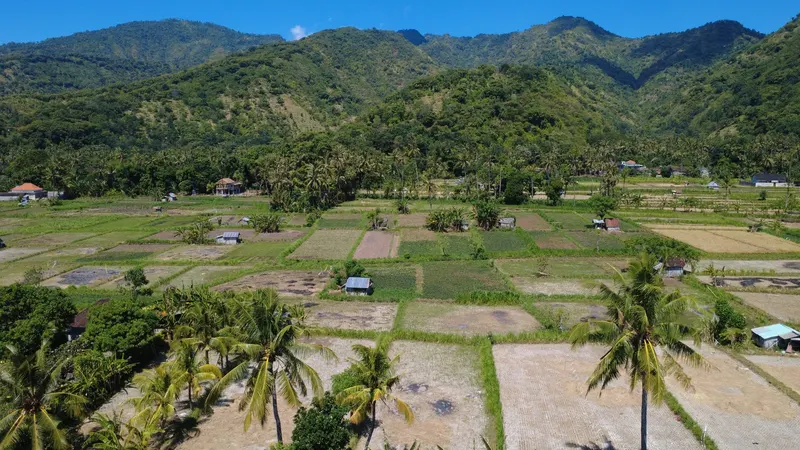
Agung stands inland to the south, the highest mountain on Bali and the one the island holds sacred. Its old eruptions laid down everything along this coast: the pebbles here, fine dark sand further east towards Amed, and the soil that feeds the fields on its lower slopes. A mountain that size makes its own weather. Cloud gathers round the summit through the middle of the day and lifts again towards evening, so the clearest view is early, and the clearest months are May to September.
Salt, made by hand, for decades.
Walk or drive a little way east and the pebbles give way to fine dark sand. That is where the salt comes from, and it has been made the same way here for decades. Seawater is carried up the beach and spread over beds of sand, the sun takes the water and leaves the salt behind, and the salted sand is rinsed through into a strong brine that finishes drying in hollowed trunks. It is slow work for a small return, and it is still done by hand within sight of the mountain that made the sand.
Nothing here is staged.
Tianyar is small: a temple at the water's edge, and a quiet that runs on its own calendar. Offerings are laid out on doorsteps every morning because they are meant, not because anyone is watching. A ceremony comes before the road and before us. What visitors notice first is the quiet, and the quiet comes from the fact that nobody is performing.
Three things worth knowing.
None of this is complicated. It is just the difference between a visitor and a guest.
- Temples
- Covered shoulders and knees, and step around the offerings on the ground rather than over them.
- Photographs
- Ask before you photograph someone at work. Most people say yes.
- The road
- It belongs to the village. Drive slowly, and if you meet a ceremony, wait.
Sleep on a coast that still works.
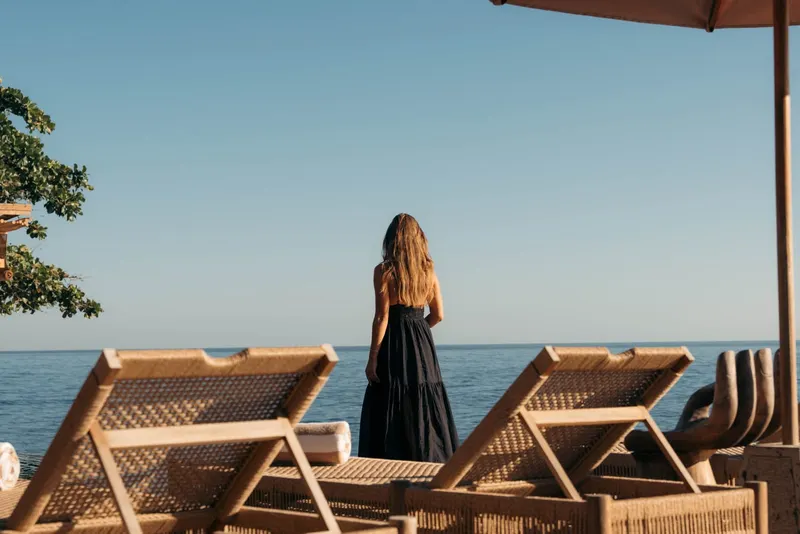
Eleven canvas lodges behind Saga, about fifty to eighty metres from the water and about three hours north of the airport. Enquiring costs nothing and commits you to nothing.
A real person replies. We reply the same day, whatever your time zone.