Updated
What ends up on the plate along Tianyar's pebble coast, and why it follows the sea rather than a set menu.
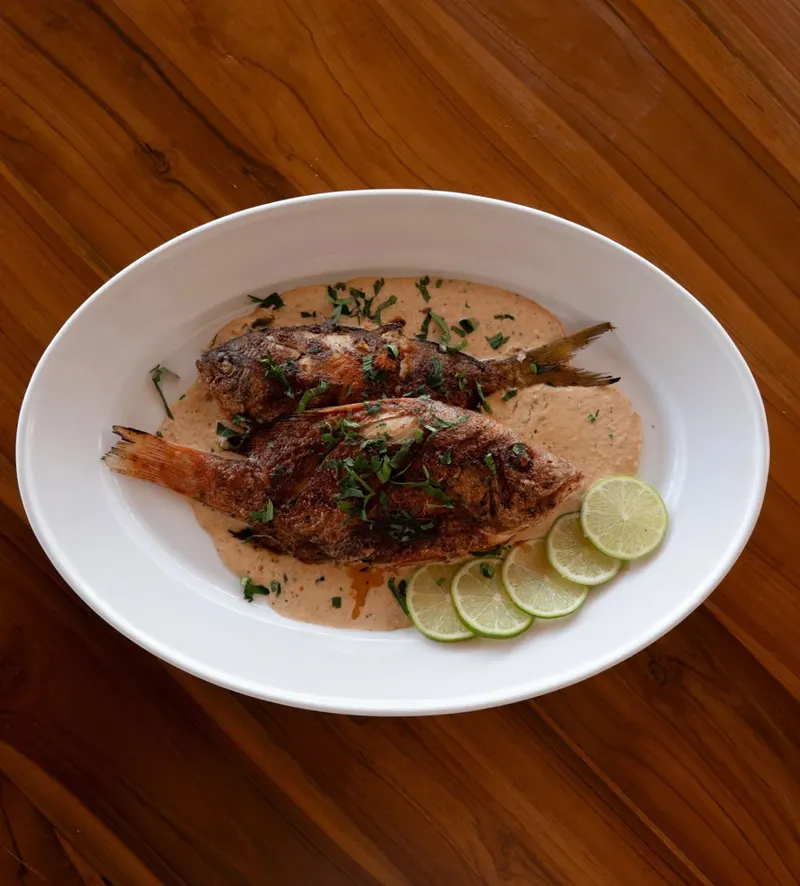
Food on this coast follows the sea and the land behind it. Fish comes in on the jukung, and Saga, our restaurant, cooks Indonesian and seafood dishes, with catch of the day on the menu when the sea allows. The kitchen is open from 12:00 to 21:00, and Saga is open to anyone on this coast, staying or not.
What comes off the boats?
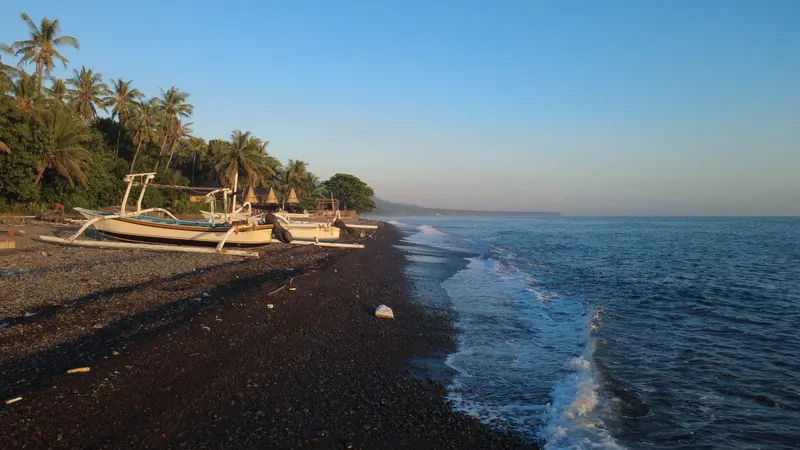
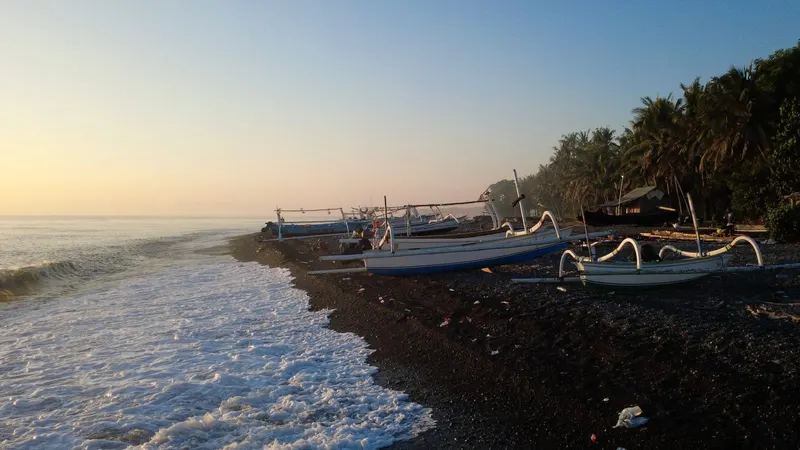
Most mornings the jukung land on the shore, and Saga buys what it needs from them. There is no fixed fish menu because there cannot be. Some mornings the catch is smaller, and the kitchen says so.
What comes off the land?
Behind the coast the ground rises towards rice terraces, and villages grow what the terraces and dry slopes allow, such as rice, coconut and banana. Coconut turns up in much of the cooking. Further along the coast, towards Amed, families still make salt by hand, as described in the salt of the north coast.
What is the cooking like?
Plain by design. Grilled over an open flame, steamed in banana leaf, with chilli and lime, ground by hand into sambal rather than blended smooth. It is home cooking, not food built for a photograph.
What is Saga like?
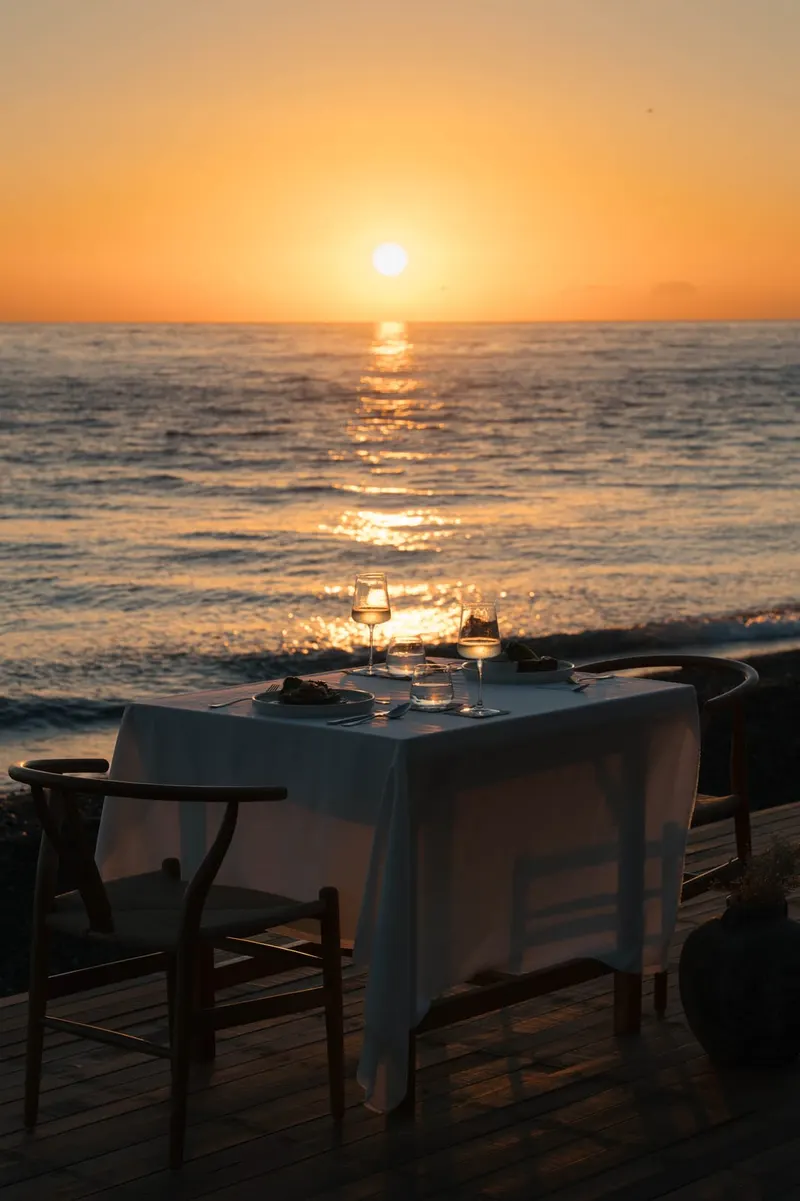
Saga is a restaurant and coffee bar, open air under alang-alang. Breakfast runs from 07:30 to 10:30, and coffee runs all day, with beans from the East Java highlands roasted locally. On some mornings, when the sea allows, guests go out with a fisherman for Catch and Cook, and the catch is cooked at Saga that evening.
VELA Tianyar is eleven canvas lodges behind Saga, our restaurant, on the pebble shore at Tianyar Barat, north-east Bali.
Quick answers
Is Saga open to people who are not staying at VELA?
Yes. Saga is open to anyone on this coast, staying or not.
When is breakfast at Saga?
From 07:30 to 10:30. The kitchen is open from 12:00 to 21:00 and coffee runs all day.
Is there fresh fish on the menu?
Catch of the day is on the menu when the sea allows. Some mornings the catch is smaller, and the kitchen says so.

Stay on the pebble shore at Tianyar.
Eleven canvas lodges behind Saga, a few steps from the sea.
Read it in person.
The lodges are a few steps from the water. Pick your dates and ask.
A real person replies. We reply the same day (Bali time).