Published
How villages further along Bali's north-east coast still make sea salt by hand, from dark volcanic sand, seawater and sun.
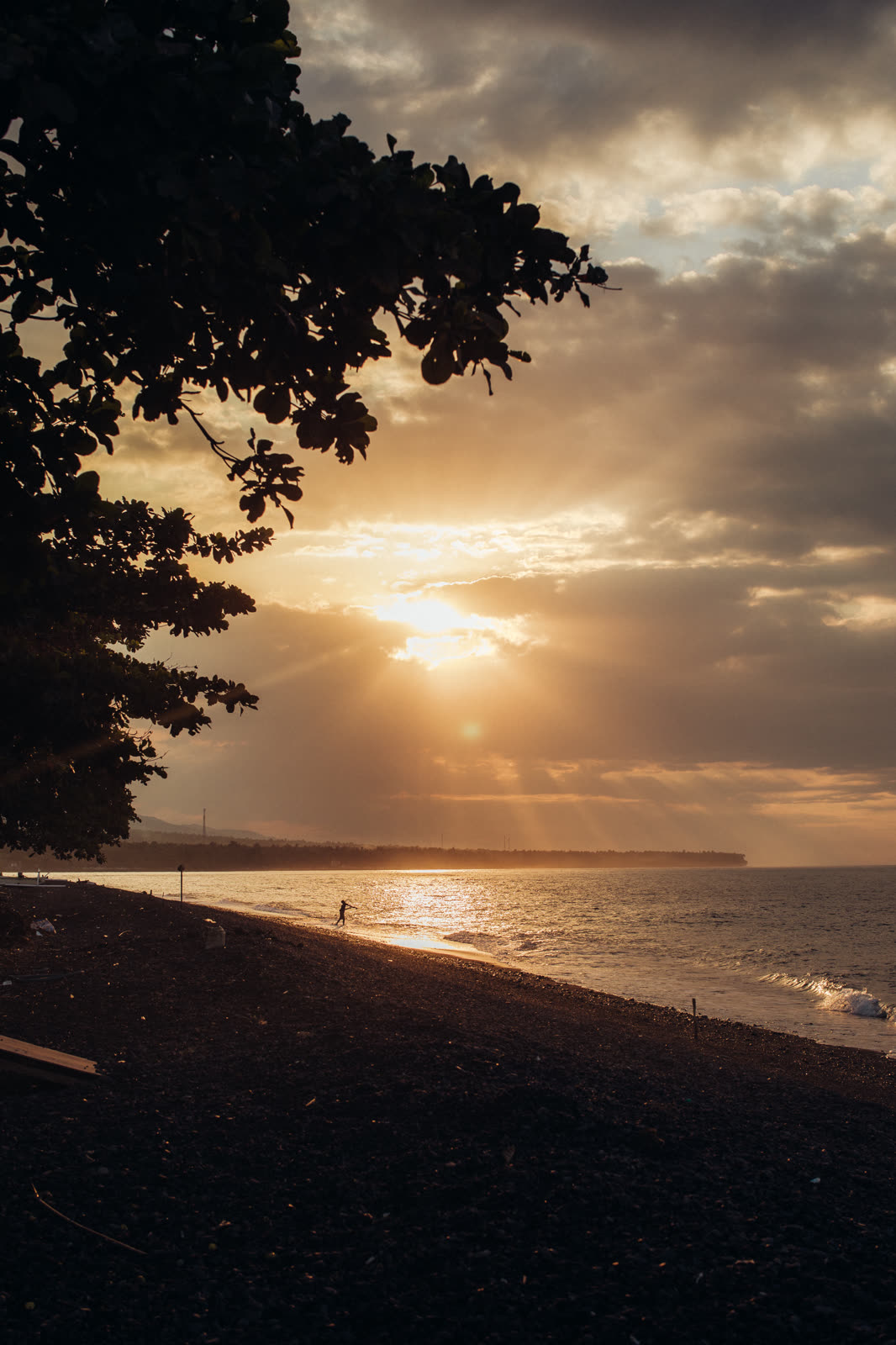
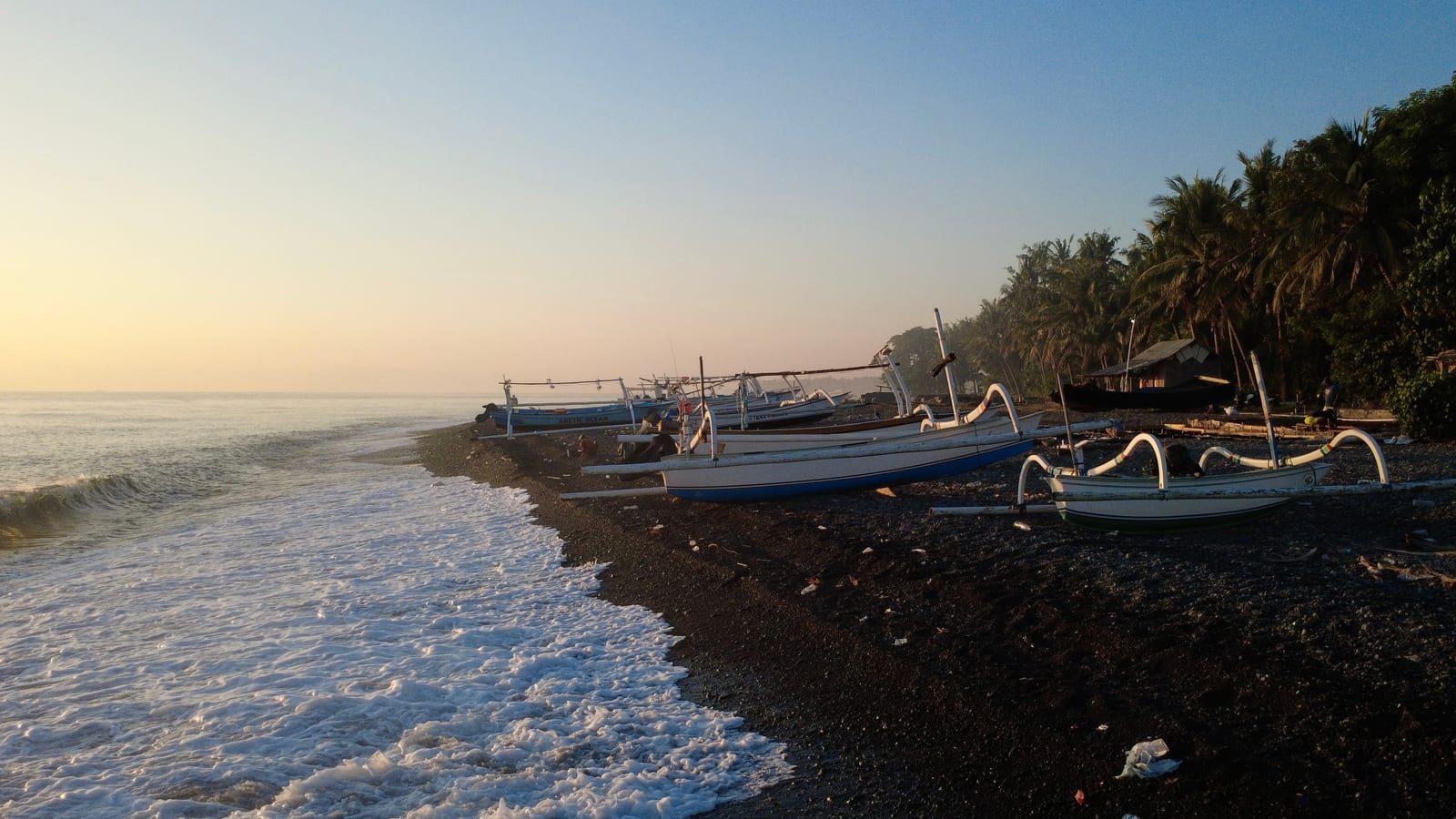
VELA's own stretch of shore is dark pebbles, but a little further along the coast towards Amed the beach turns to fine dark sand. For generations, the families there have used it to make salt. No machines, no factory, just seawater, sand and the sun. It is one of the oldest kinds of work on this coast, and some of it still goes on today.
The old way
The method is simple and slow. Seawater is carried up from the shore and poured over the dark sand, then left to dry in the sun. As the water goes, the salt stays behind in the sand. The salt-rich sand is gathered and rinsed with more seawater, which filters through it into a strong brine. That brine is left in shallow troughs, often hollowed from palm trunks, until the last of the water lifts off and clean crystals are left in the base.
Why this stretch of coast
This part of Bali has what the work needs: strong sun, dry air for much of the year, and long dark-sand beaches that hold the heat. The sand itself matters. Its dark colour draws the sun and speeds the drying, which is why the practice took hold along the coast towards Amed and Kusamba rather than on the paler beaches of the south.
A vanishing trade
There are fewer salt makers now than there once were. It is hard work for a small return, and younger hands often look elsewhere. The families who keep at it do so by habit and by pride, and the salt they make carries the taste of this particular coast. Buying a little from them, or spending an hour watching how it is done, helps the work stay alive.
Seeing it for yourself
If you would like to see this old craft for yourself, we can arrange time with a local salt maker a short way along the coast, to see the troughs and try the work first-hand. Ask us when you arrive and we will set it up.
VELA Tianyar sits a short way along this same coast, where the salt has always been made by hand.